
How to Prevent Composite Deck Warping and Understand Board Movement
Capped composite decking can still move as temperatures change. To learn how to prevent composite deck warping, focus on correct installation: allow for movement at board ends and around the deck’s perimeter, use the specified clip system, and follow the spacing requirements for the board profile.
It’s understandable to worry when boards shift, lift or look uneven, especially after hot weather. Movement alone doesn’t necessarily mean a board is warped. Heat can cause expansion and contraction, while poor spacing, incorrectly fitted clips or problems with the supporting frame can contribute to lasting issues.
This guide explains how temperature and clip installation affect composite decking, what helps reduce the risk of warping, and what to look for in a warranty. You’ll also learn why an uneven board needs assessment to identify the cause before anyone tries to flatten or replace it.
Table of Contents
What is Warping, and How Does it Affect Outdoor Decking?
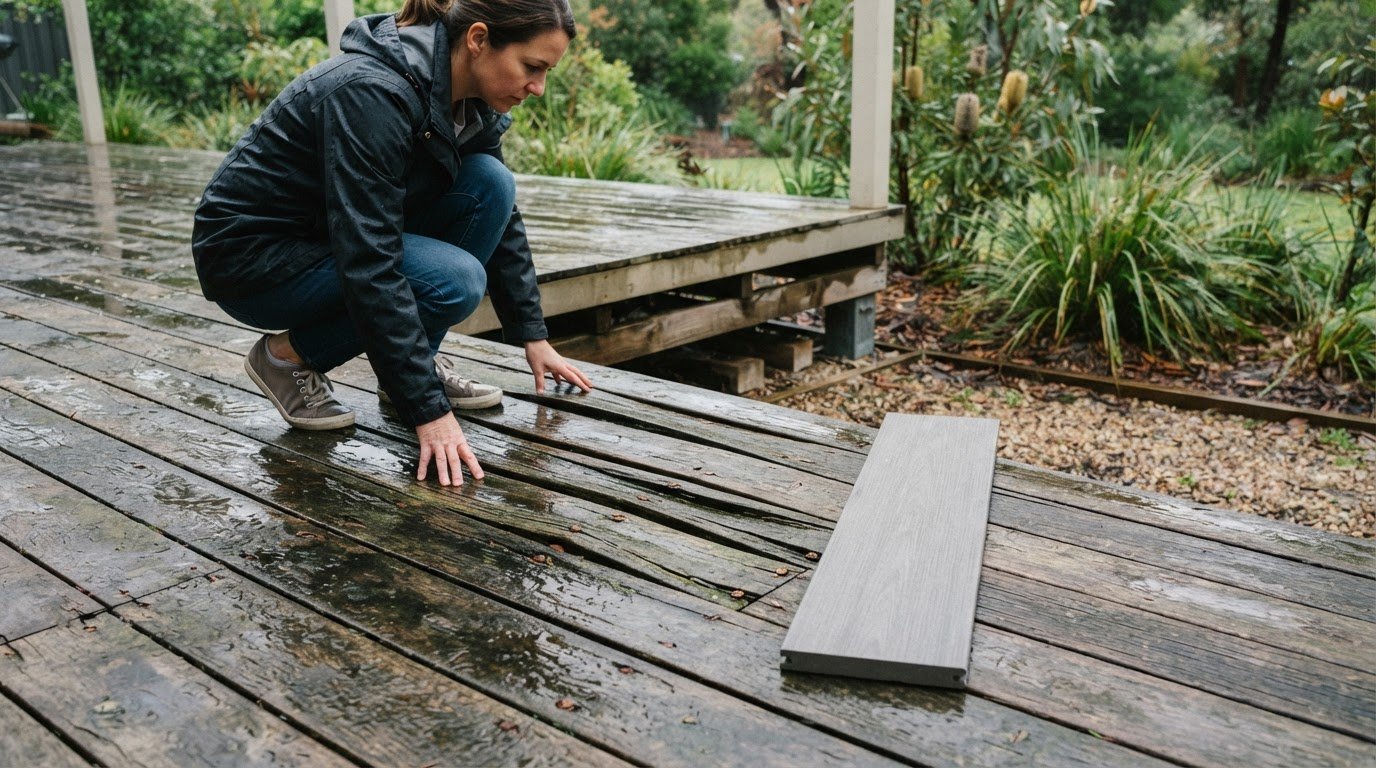
Warping describes a board that bends or twists out of its intended shape. On a deck, it may appear as a raised edge, a bowed section or a board that no longer sits evenly on its supports. Composite boards combine plastics, wood fibres and bonding agents, and temperature changes can make them expand or contract. This movement is expected; restricted movement or inadequate support can turn it into a problem.
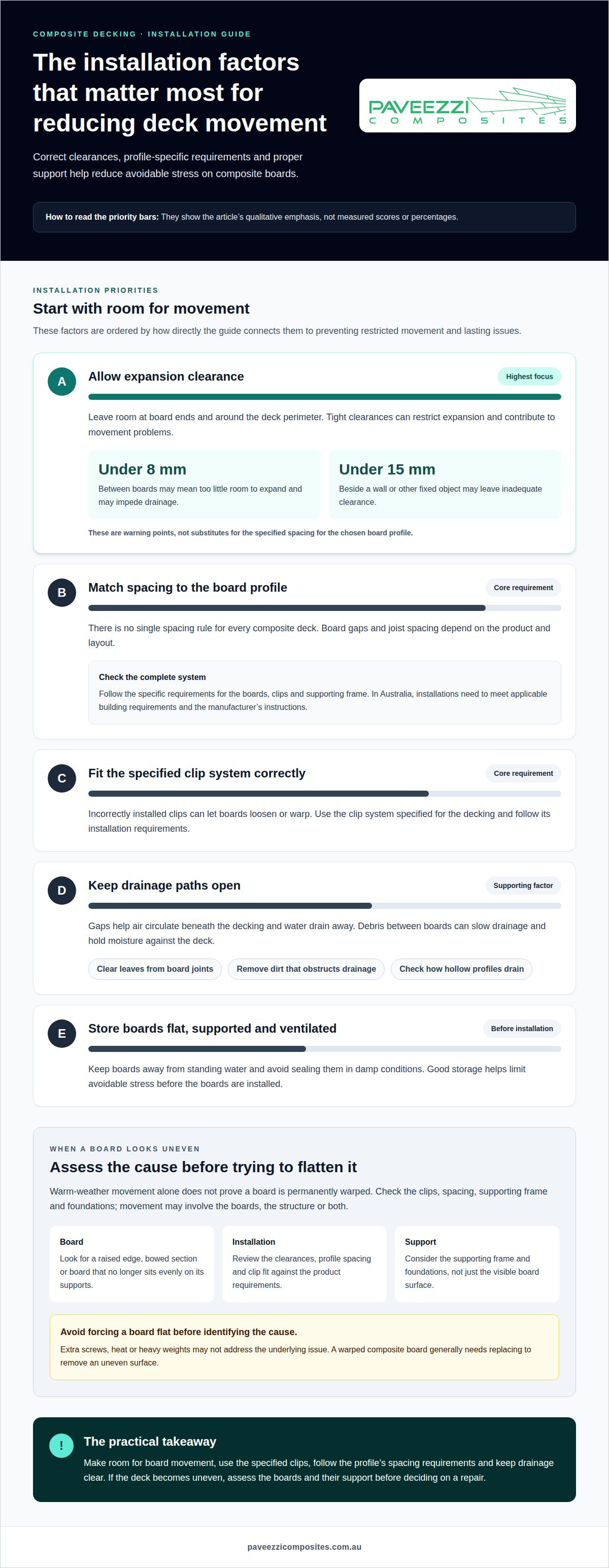
In Australia, installations need to meet applicable building requirements and the manufacturer’s installation instructions. There isn’t one spacing rule for every composite profile: board gaps and joist spacing depend on the product and layout. Follow the requirements for the specific boards, clips and supporting frame.
Expansion clearance matters at both board ends and the deck perimeter. Boards spaced less than 8 mm apart may have too little room to expand and may impede drainage. A board placed within 15 mm of a wall or another fixed object may also lack adequate clearance. These figures are useful warning points, not substitutes for the specified spacing for your chosen profile. Review composite decking profiles by Paveezzi Composites before settling the layout.
Gaps also help air circulate beneath decking and water drain away. Debris lodged between boards can slow drainage and hold moisture below the surface. Before installation, store boards flat, supported and away from standing water, with ventilation rather than sealed in damp conditions. With hollow boards, water may become trapped if the profile or its ends prevent drainage. The board design and installation details determine how water escapes.
Don’t force a warped board flat with extra screws, heat or heavy weights before understanding the cause. A temporary clamp may help level a board during a repair, but a warped composite board generally needs replacing to remove the uneven surface. If using a shaped wood clamp, choose strong, dry timber long enough to cover two adjacent decking boards. Position it across the middle of the affected board, and keep the shaped wood no higher than half the screw. A washer can stop the screw from passing entirely into the wood.
These details work together. A tight wall clearance, for example, can restrict expansion, while debris beneath the same area can obstruct drainage. Board storage, perimeter gaps, open drainage paths and profile-specific installation requirements all help reduce avoidable stress on the finished deck.
Do composite decking warranties cover warping?
A composite decking warranty may cover warping, but coverage depends on the product’s written terms. Warranties typically last between 20 and 50 years, yet their conditions vary. A warranty period alone doesn’t establish whether a particular warped board qualifies for a claim.
In Australia, the work needed to prevent or repair warped decking depends on what requires attention: cleaning, replacing boards or addressing the supporting frame. The amount of work, access to the affected area and materials required also matter. Prevention centres on correct installation and maintenance; a board that is already warped may need replacement.
Read the warranty’s definitions and conditions for defects, installation, maintenance and claims. These details help distinguish a product fault from movement related to installation or the deck’s supporting structure. Keep purchase and installation records, and document changes such as a board lifting or bowing. Painting composite decking can void some manufacturers’ warranties, so don’t assume a coating is permitted.
Composite boards contain plastics, wood fibres and bonding agents. This composition can help resist moisture, but it doesn’t make the material immune to it. Excessive moisture absorption may cause swelling, followed by contraction as boards dry. Dirt and leaf litter can also hold humidity and rain against the surface. Sweep away debris regularly and clean the decking to reduce build-up. For example, clear leaves from board joints and remove dirt that could obstruct drainage.
Timber, PVC and composite behave differently outdoors. Timber absorbs moisture and expands, then contracts as it dries; repeated cycles can contribute to cupping, bowing or twisting. Composite also moves with temperature and can swell if it absorbs excessive moisture. PVC differs from wood-plastic composite, so its movement and care requirements depend on its product design. Compare the manufacturer’s maintenance and warranty terms rather than assuming all decking responds alike.
Appearance is only one concern. A raised edge or uneven board can catch a foot, while loose or displaced boards may affect the surface’s stability. Composite decking typically lasts between 25 and 50 years; traditional wood decks typically last 10 to 30 years. Those lifespan ranges don’t determine warranty coverage. The written terms and the cause of the damage matter. Explore composite decking options with the material, installation requirements and maintenance guidance in mind.
Does hot weather mean my deck is warping?
Movement during hot weather doesn’t automatically mean a composite board is permanently warped. Joist spacing needs to match the specific board profile and deck layout, not a single figure for every Australian installation.
Moisture and temperature changes
Warping can develop when moisture and temperature changes put repeated stress on decking boards. Composite boards expand and contract with temperature, while excessive moisture absorption can cause swelling followed by contraction as boards dry. These changes matter because an uneven surface may involve the boards, the supporting frame or both.
If one area of a deck becomes uneven after wet weather and hot sun, the board surface alone may not explain the change. Movement in the supporting frame or foundations also needs assessment. Consider when and where the unevenness appeared, then distinguish ordinary thermal movement from a persistent change in shape.
Moisture absorption and thermal movement
Thermal movement is the expansion and contraction of composite decking as its temperature changes. Moisture absorption is a separate cause of swelling, followed by contraction as the material dries. Both can affect how boards sit, especially if the installation restricts movement or water remains around the deck.
In a hot location with prolonged direct sunlight, a sunshade or awning can reduce UV exposure. Shade doesn’t correct an installation or frame issue, but it can lessen exposure in the area it covers. A board that remains uneven after temperatures change needs assessment for causes beyond heat-related movement.
A stable, moisture-resistant subframe
A subframe is the supporting structure beneath the decking and needs a stable, well-prepared foundation. Durable, moisture-resistant materials, such as plastic or metal, can be used for the subframe. A sound board can still sit unevenly if its supports move or fail to provide consistent support.
Joists spaced too widely can let boards sag between supports. Spacing therefore needs to match the board profile and layout, not an assumed standard. If the deck dips between joists, consider the support spacing and frame condition as well as the boards. A level-looking surface depends on both.
Moisture damage and standing water
Standing water remains on or beneath the deck instead of draining away. If drainage is obstructed, moisture can collect around boards and the supporting structure. After weather-related damage, prompt attention can help prevent the affected area from deteriorating further.
After rain, look for water collecting beneath the deck and around its edges. Leaves, dirt or blocked drainage paths can contribute to moisture build-up. If a deck becomes uneven, assess its boards alongside the supporting frame and foundations. This helps identify whether the concern is water, structural movement or both.
Correct installation of clips
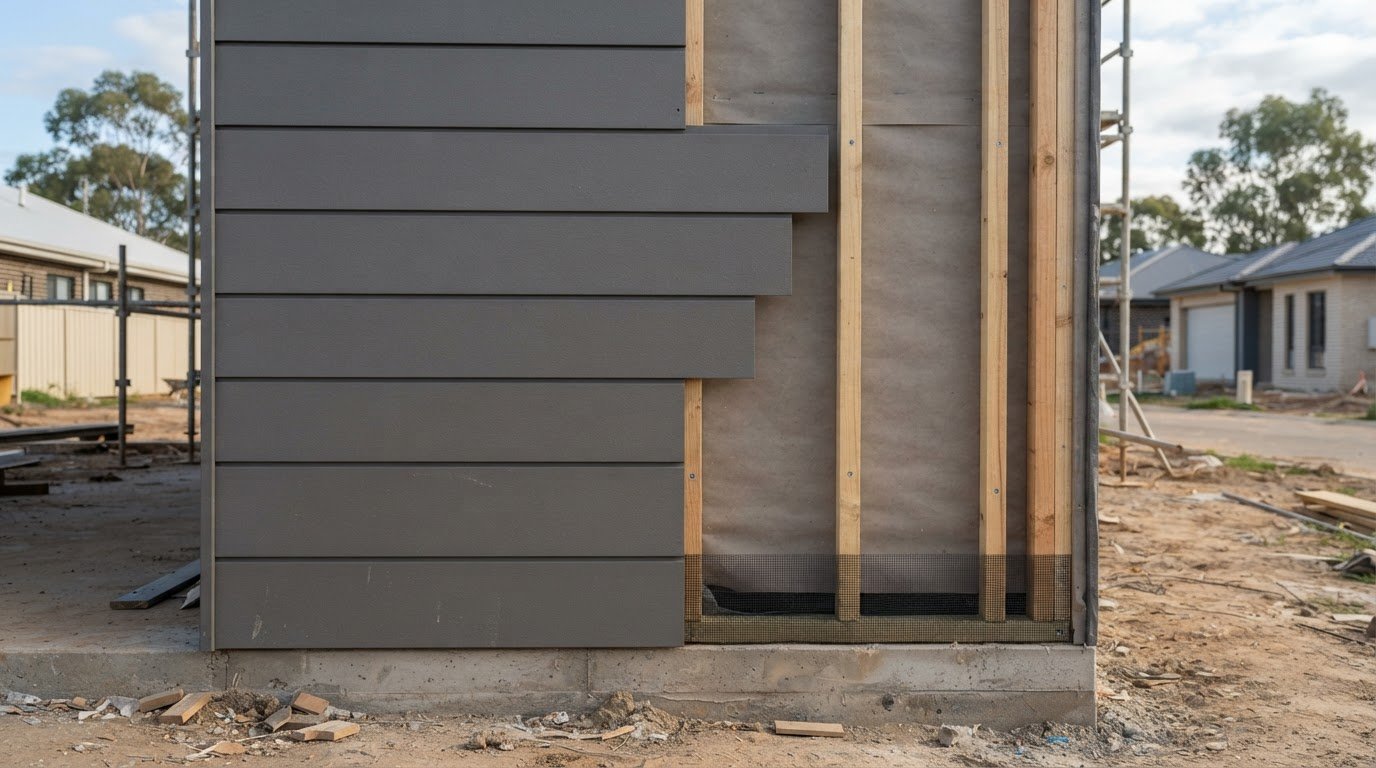
Clips secure composite decking boards to the supporting frame while allowing the movement designed into the system. Incorrectly fitted clips can let boards loosen or warp, so correct installation depends on the board profile and specified fixing method. A clip that doesn’t engage properly may leave an edge unsupported, even if the deck looks level when first installed.
Preventing composite deck warping starts with using the clip type and screw combination specified for the decking system. The installation instructions explain where clips sit, how they engage with board edges and how they attach to the frame. Follow the same method across the deck. Mixing components or improvising fixings can create uneven restraint between adjacent boards.
Alignment matters as much as the clip itself. If clips sit inconsistently along a joist, board edges may be held at different heights or distances. This can produce irregular gaps or a raised edge along a run of decking. Before fixing boards, ensure the supporting surface is stable and clips line up with their intended fixing points. Joist spacing must suit the specific board profile and layout.
Screws should hold each clip securely without distorting it or preventing the board’s designed movement. A loose screw can undermine stability; forcing one into a misaligned clip won’t solve the cause. If a board shifts or lifts, inspect its clip engagement, screw and supporting joist. Avoid adding extra screws before identifying the issue, as this may hide the symptom while leaving the original fault in place.
Use the clip and screw combination specified for the decking system.
Align clips with their intended support points and engage them correctly with board edges.
Secure fixings as directed, without forcing a clip that doesn’t sit properly.
Investigate a raised or loose board before changing its fixings.
If one board moves while its neighbours remain steady, inspect that board’s clip engagement and joist support. If several boards shift together, the pattern may point to a broader frame or repeated installation issue. Preventing composite deck warping starts with diagnosing the pattern before attempting a repair, rather than using heat or extra screws to flatten the surface.
Consistent clip installation helps keep boards secure while preserving their intended movement. If you’re planning a deck, explore composite decking options alongside the installation requirements for the selected profile.
Paveezzi Composites
Paveezzi Composites supplies composite decking and cladding for residential and commercial projects, helping you consider suitable materials alongside installation requirements. If you’re planning a new deck or selecting replacement boards, its range includes Decking Ressisto 143 Brushed and Decking Ressisto 138 Extra Matte. Choosing a profile is only one part of preventing movement: the supporting frame, clip system, spacing and drainage also matter.
Use this guidance to discuss board movement and installation considerations as you plan your project. A clear understanding of the deck’s intended use and layout can help inform product selection, while the manufacturer’s instructions remain essential for correct installation.
For information about composite decking options, contact Paveezzi Composites.
Plan your next deck with confidence
A sound plan to prevent composite deck warping starts before boards are ordered. Consider how the deck will be used, the conditions around it and the finish you want. These priorities can guide a practical discussion about materials and installation requirements; choosing a product doesn’t replace careful planning.
If you’re comparing options for a wider outdoor project, Paveezzi Composites also offers Cladding Ressisto 144 Fineline and Cladding Ressisto Lightissimo202. Consider how the deck and surrounding finishes will work together visually, then carry those preferences into the project discussion. A considered plan makes it easier to align the intended look with the requirements of the selected decking system.
For guidance on your project and available composite options, discuss your decking plans with Paveezzi Composites. A well-informed next step can help you move from ideas to a deck planned with care.
Frequently Asked Questions
Can capped composite decking still move?
Yes, capped composite decking can still expand and contract as its temperature changes. A cap doesn’t make a board immobile. For example, a board may shift slightly during a hot afternoon and settle as conditions change. Movement that persists, worsens or leaves a board visibly raised deserves closer assessment. Check the board’s fixings and supports as well as its surface before deciding whether the board itself needs attention.
Why Does Timber Warp, and How Is Composite Different?
Timber warps as it absorbs moisture and dries through repeated weather cycles. Changing moisture content can make timber cup, bow or twist. Composite decking is made from plastics, wood fibres and bonding agents, so it moves differently: temperature changes cause expansion and contraction, while excessive moisture absorption can cause swelling. A timber board that twists after repeated wetting and drying, for instance, has a different cause from a composite board shifting with heat.
What Is the Difference Between Warping and Normal Movement?
Normal movement is a change in a board’s position as temperature varies; warping is a lasting bend, twist or bow in the board itself. Compare the same area under different conditions: movement that follows temperature changes may be thermal, while a shape that remains distorted needs investigation. A raised edge, persistent bow or board that no longer sits evenly on its supports can help distinguish physical deformation from temporary movement.
Will replacing a bowed board solve the problem?
Replacing a bowed board removes that board’s uneven surface, but won’t necessarily resolve the underlying cause. If a new board is fitted where the supporting joist has moved or a clip is loose, for example, the replacement may also become unstable. Before replacing it, assess the affected board’s fixings, nearby boards and supporting frame. Addressing the cause helps avoid treating the visible symptom while leaving the contributing condition in place.
What causes composite decking to warp, buckle or sag?
Restricted movement, incorrectly installed clips, excessive moisture absorption and inadequate support can all contribute to deck problems. Sagging between joists points to insufficient support spacing, while a loose board may indicate clip or screw issues. Moisture-related swelling can be followed by contraction as boards dry. The pattern matters: one displaced board suggests a local issue, while several uneven boards may indicate a broader frame or foundation concern.
What expansion gaps should be left between composite deck boards in Australian climates?
There isn’t one gap that suits every board profile or layout. Composite boards spaced less than 8 mm apart may lack room to expand and may impede drainage; boards within 15 mm of walls or other fixed objects may also lack sufficient clearance. Treat these as warning points, not universal installation specifications. Use the spacing requirements for the selected profile and account for the deck’s edges, drainage and layout.
Comments